Arnaldo Caprai

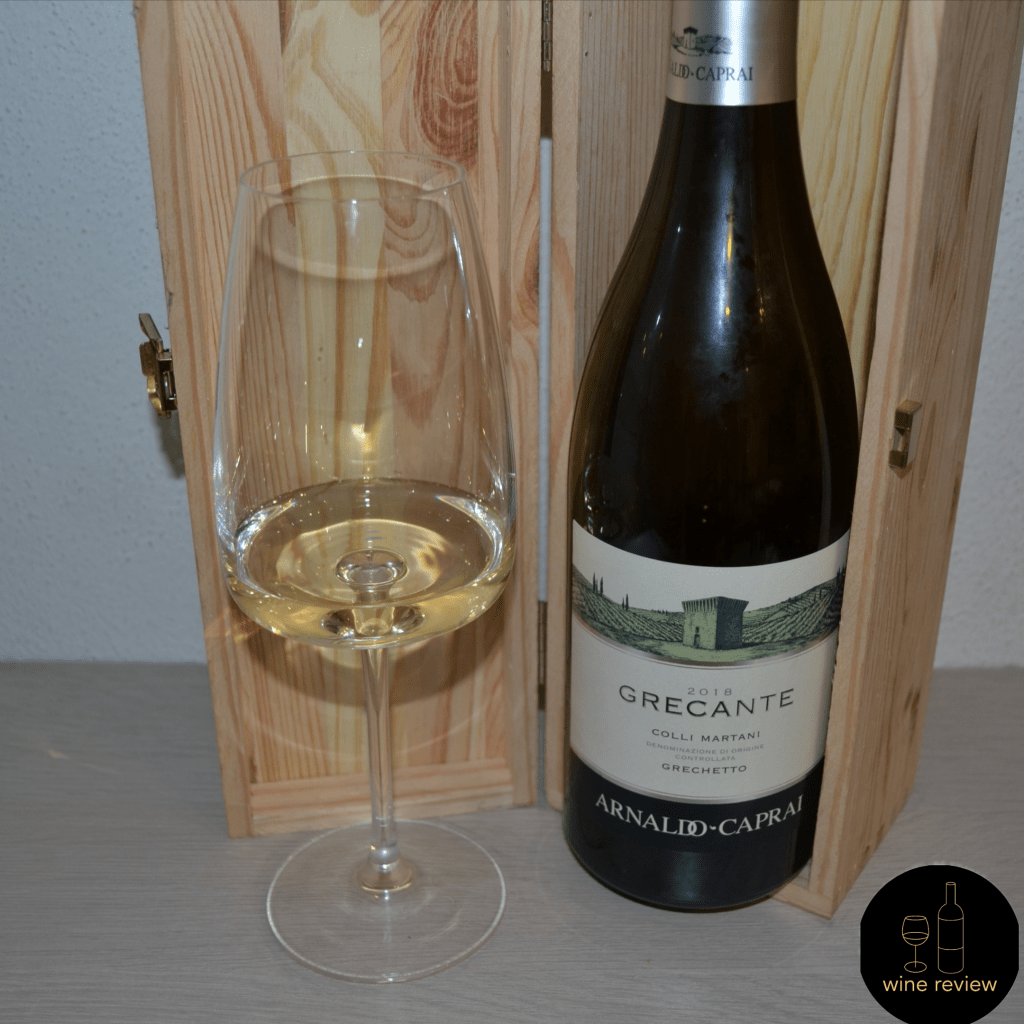
Grecante Arnaldo Caprai

Arnaldo Caprai’s Grechetto “Grecante” is one of the Umbrian white wines par excellence. The Grechetto grape variety is firmly linked to local history and tradition, and is the expression of the Umbrian territory in its white version. The Caprai winery, one of the most famous names in regional viticulture. The characteristics of pleasantness and freshness are refined in a fine and elegant line. The objective that looks at quality cannot be separated from a great deal of attention to the environment and its sustainability, a subject very dear to the Arnaldo Caprai winery. “Grecante” is a 100% Grechetto, coming from vineyards located in the Montefalco area, home of the red Sagrantino. The must obtained is left to ferment in steel containers. The refinement, which lasts 3 months, also takes place in steel. A final period of at least 3 months in the bottle completes the maturation and makes Arnaldo Caprai’s Grechetto ready for marketing. It has a straw yellow color, with good brilliance. Its scent is intense and engaging; turns on notes of yellow peach and melon combined with a chalky and fine minerality. A full body with an evident freshness.


Wine tasted at a tasting of a selection of Arnaldo Caprai’s white and red wines at the Enoteca Saggi in Bologna. What remained of the evening in addition to the company of friends with whom we spent a fantastic evening was this white wine that really impressed me for its elegance as its acidity is not too marked with alcohol and sugars gives this white an excellent result.
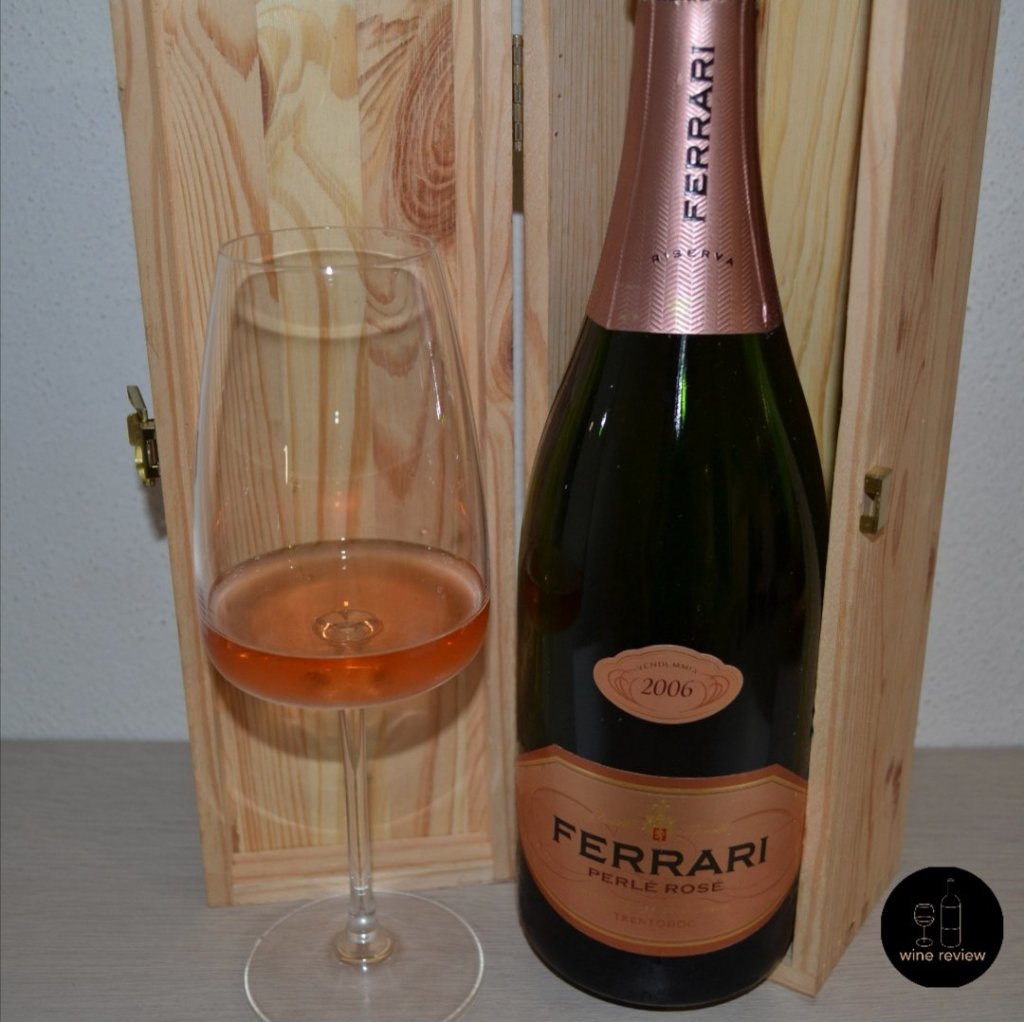
FERRARI

Perlé Rosé FERRARI

Trento Spumante Brut Rosé is a very elegant bubble, in which you can feel a perfect correspondence between taste and smell. Aging contributes to giving the nose also fragrant references to yeasts, which combine to enrich the profile of a Spumante that confirms Ferrari’s immense vocation in declining the Trento DOC through different facets. Refined and stylish, it is the perfect Rosé for all occasions. Produced from the assembly of Pinot Noir and Chardonnay grown at various heights, between 300 and 600 meters above sea level. The must ferments for the first time in steel, then refermenting directly in the bottle, where the Spumante remains to refine on the lees for 36 months. Once maturation is complete, Ferrari proceeds with disgorgement, dosage and bottling operations. It has an antique pink color and a constant perlage. By analyzing olfactively the glass, aromas of small red berry fruit emerge, allowing light references to bread crust and yeast to penetrate. In the mouth it is medium-bodied, elegant and harmonious, characterized by a fresh and savory sip, which on the finish has a vanilla flavor.

This magnificent Rosé from the Lunelli family was given to me as a gift. It left me speechless. One of those wines that excited me, that I will remember for its goodness and also for the sensation I felt while drinking this wine. As a rosé lover, I was really impressed by the mastery of the chef de cave in producing this bottle, an expression of perfection and great work. Comparable to the great rosé Champagnes. An experience to try absolutely.

Brezza Giacomo

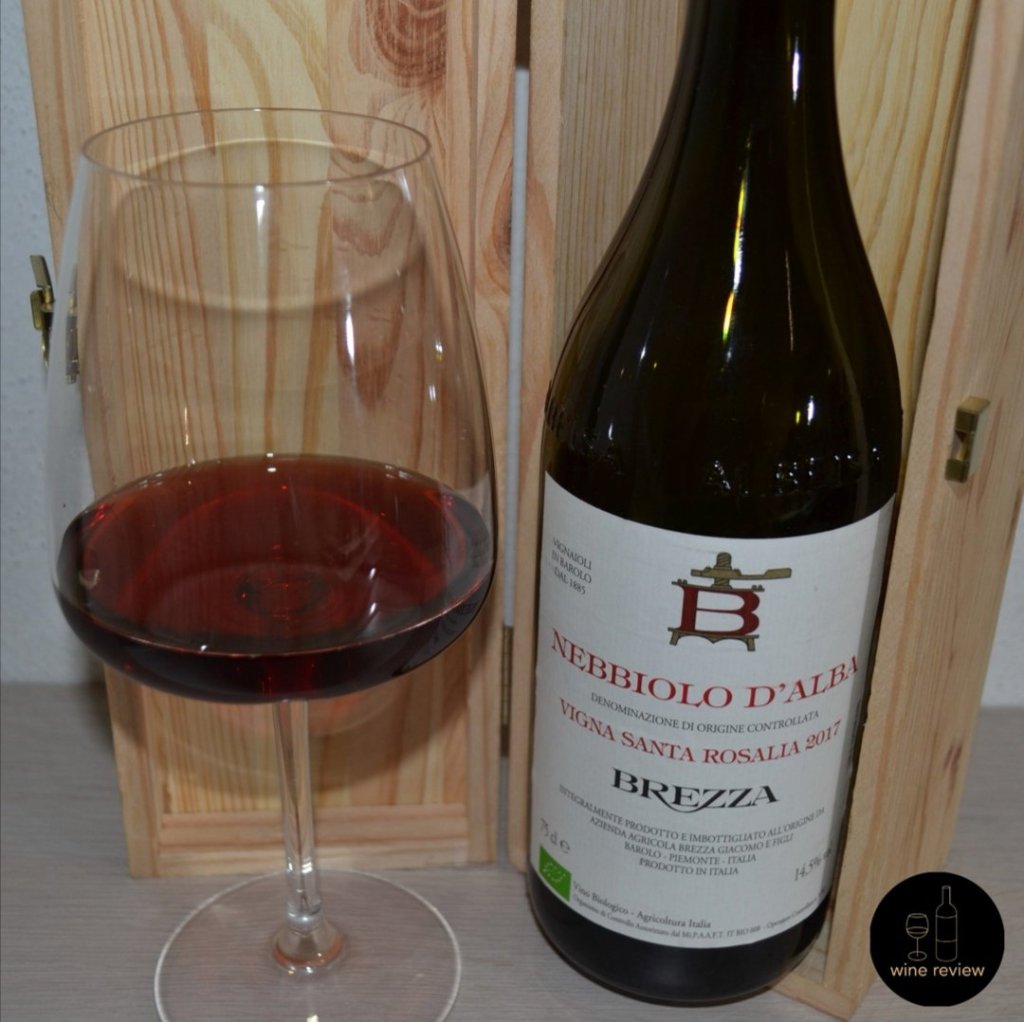
Nebbiolo d’Alba Brezza

Giacomo Brezza’s “Vigna Santa Rosalia” is an elegant and intense Nebbiolo d’Alba. A beautiful expression of this classic red from the Langhe. Pleasant to drink even when young, although it also has a good propensity for aging. The nose expresses aromas of cherries, peaches and berries. On the palate it is pleasantly fresh and fruity, with well integrated tannins and a persistent finish. It is produced by the Giacomo Brezza winery in the historic family estate, which is located right near the town of Barolo. Twenty-two hectares, of which about sixteen are planted with vineyards, managed under organic farming. The Vigna Santa Rosalia is located at an altitude of about 300 meters above sea level. fermentation takes place with a fairly short maceration on the skins, of 6-8 days, to avoid excessively tannic extractions. After malolactic fermentation, the wine is transferred to oak barrels, where it remains to mature for about a year and completes the refinement with another 12 months in the bottle before being put on the market.

I drank this wine with a friend one evening when we decided to have a Nebbiolo tasting. Drunk as a second bottle and this allowed me to fully appreciate the characteristics of this wine, listed above. I was struck when I drank its softness on the palate which made it an incredibly easy to drink wine. It must be said that nebbiolo, even if one of the iconic Piedmontese vines must be liked because with the high concentration of tannins it causes an incredible abstinence which however lets the triumph of aromas typical of this wine emerge.

VILLA FOLINI

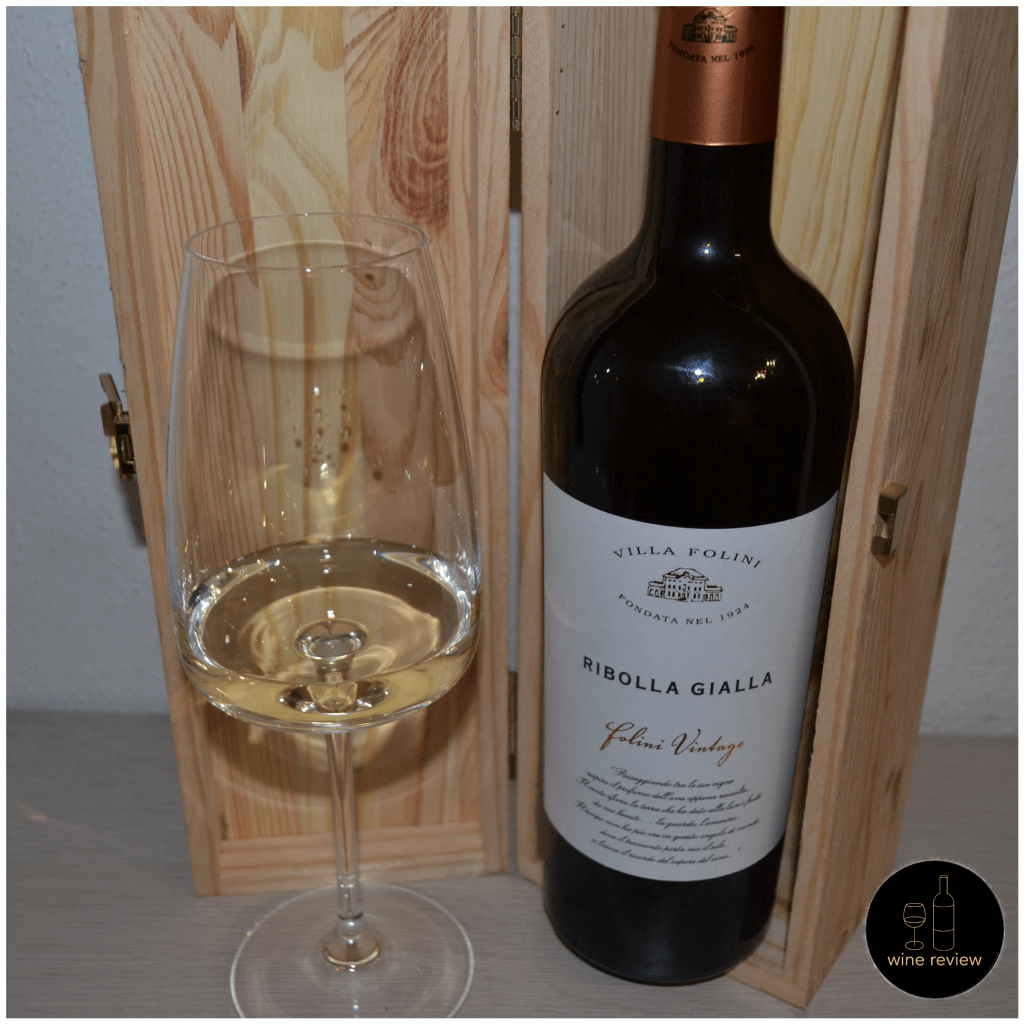
Ribolla Gialla di Villa Folini

In 1924 Giovanni Scolaris founded Villa Folini in that year, immediately sensing the potential of this precious territory: the Collio. Today Marco, the founder’s grandson, has transformed his grandfather’s vocation into a reality that has expanded on the national and international market. Simple and refined young and elegant wine.

I tasted this wine after a friend made me taste it. Very young and particular wine as it is characterized by a marked acidity. What struck me about this wine was the set of fresh and light floral flavors that made this wine easy to drink.

Recommended as an aperitif but also with light dishes, white meats and fish.

Ronchi di Cialla

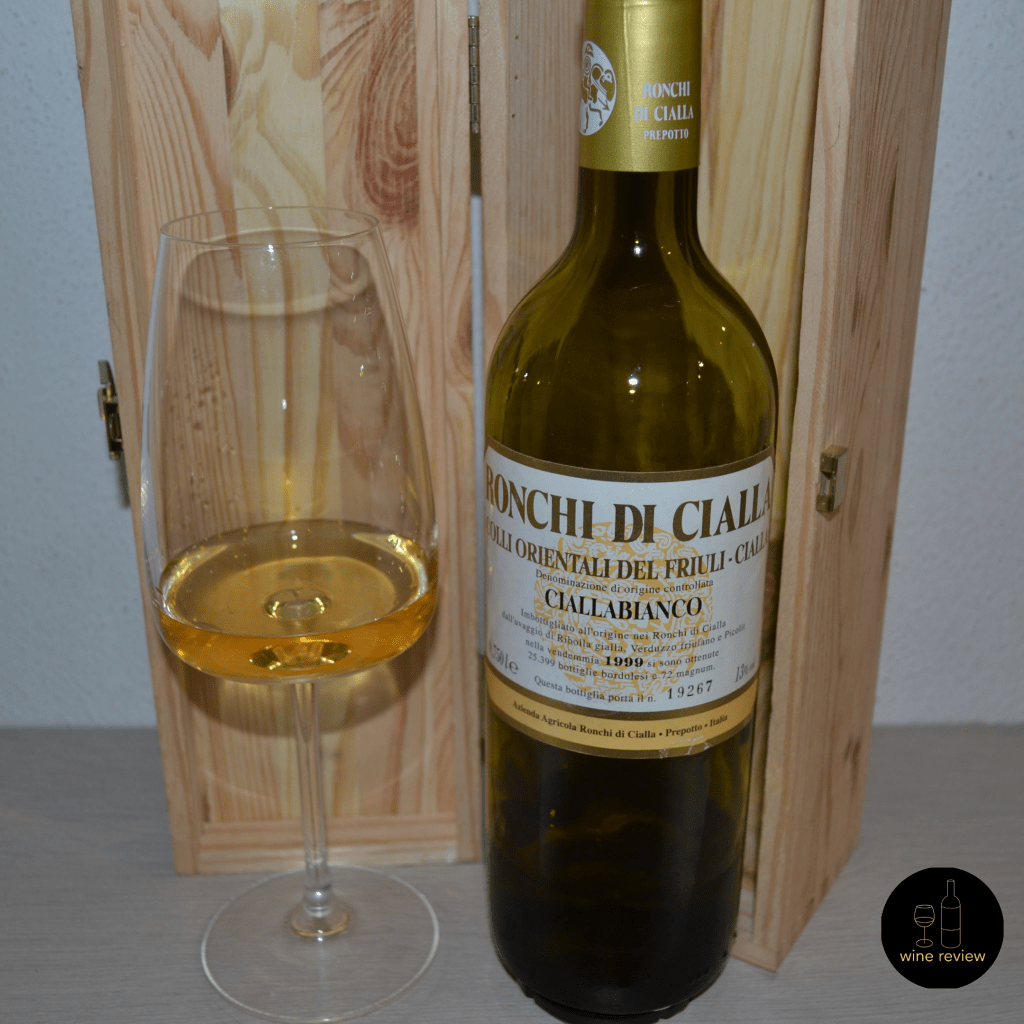
Ciallabianco di Ronchi di Cialla

The Ronchi di Cialla company is strictly family-run. Dina and Paolo were the founders in 1970. Wines are produced: Schioppettino di Cialla, Refosco dal Peduncolo Rosso di Cialla, Verduzzo di Cialla, Picolit di Cialla. The estate has about 26 hectares of vines in total, which are conducted according to an integrated agriculture with a very low environmental impact, which exclusively provides for the use of contact or organic products, respecting as much as possible the ecosystem and the balance environmental. Aging is usually carried out in barriques made with ad hoc woods and roasts, so as to naturally stabilize the wine and obtain bottles of the highest level and great longevity at the same time.

The bottle I drank, Czech, was a reserve of “ciallabianco”. Not knowing what I was going to taste, therefore, without any prejudice, this bottle composed of an art of yellow ribolla, Friulian verduzzo and picolit struck me for its maturation which highlights the ability of the Cialla family in the winemaking processes. Knowing that what the glass in front of me was a reserve (from 1999) the claims were high but have been met widely. In my opinion, the vintage would have fully expressed its potential by opening it a few years ago but still preserving the flavors of apple and peach and vanilla in a very balanced way.

It easily accompanies a whole fish meal, perfect for an aperitif accompanied by ricotta canapés, or for a fresh pasta with burrata and swordfish.

Barbacàn

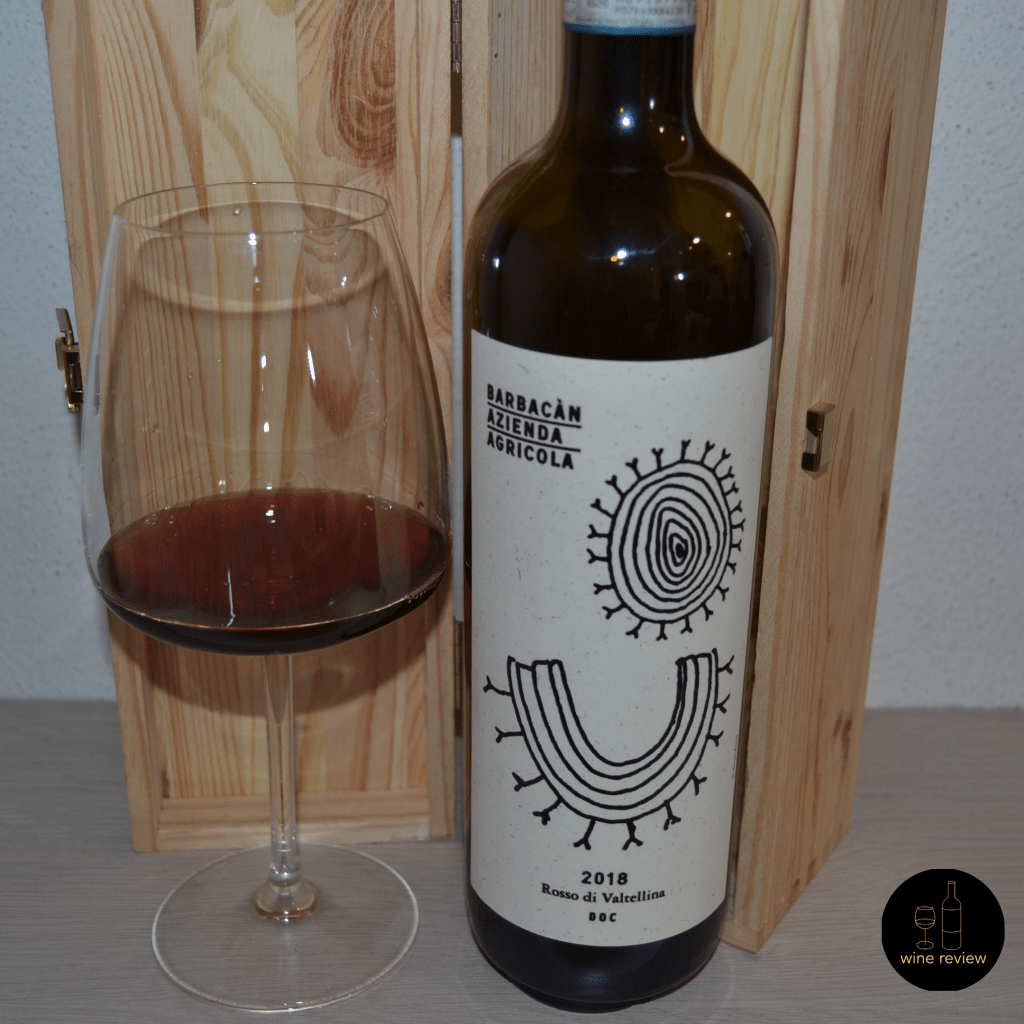
Rosso di Valtellina Barbacàn

The Barbacàn company is located in Valtellina, family-run. They cultivate: the nebbiolo or chiavennasca with which it produces three wines, Rosso di Valtellina, Valtellina Superiore Valgella Söl and Valtellina Superiore Valgella Pizamej. The family’s approach is very well reflected in their wines, not homologated to a standard and different taste in every vintage, with their quirks and, at the same time, their balances. They work by creating a real bond between themselves and the wine, trying as much as possible to respect nature and the vineyard.

What strikes me about this winery is what it can be born from the passion and care of a few hectares. I had the pleasure of getting to know Barbacan by tasting, driven by curiosity, the Valtellina Rosso produced with 100% Nebbiolo grapes and I was struck by its light flavor that makes it easy to drink. Hints of cherry, raspberry and black currant emerge accompanied by a light note of smoking. I congratulate the producers for their hard work. The wine in my opinion, left to age, evolve, could achieve high results.

Excellent in combination with the first courses with meat sauce, it also goes well with mushroom risotto and salami.

FRANZ HAAS

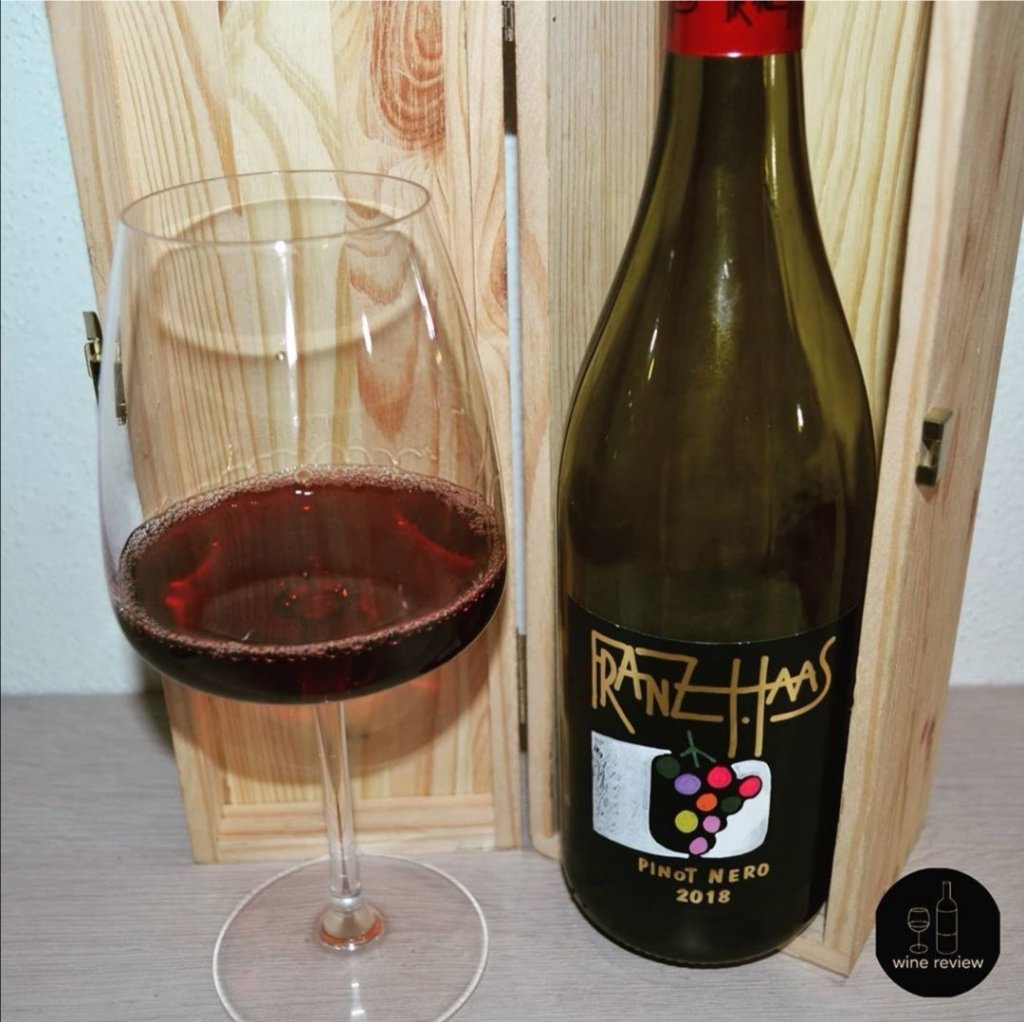
Pinot Nero di Franz Haas

It was born in 1880 and has been handed down to today always to a Franz Haas. About 55 hectares of vineyards are processed, divided between properties, rents and conferring. Recognized for Pinot Noir which was the first label chosen by Franz, first vintage ’87 but released in 90. Another detail that distinguishes Franz Haas, is the connection with the artist Riccardo Schweizer, who also collaborated with Picasso, Chagall, Cocteau, Paul Éluard and Le Corbusier and created the wine labels.

This wine, I must be honest, I found myself drinking it because I was struck by its label. Right from the start I found myself in a glass that is not easy to grow but the Haas family has been able to treat at best even if young (vintage 2018). In fact, Pinot Noir stands out for its refined and elegant characteristics. The hints of red berries, cherries and berries are enhanced in this wine. He has no chance with the same grape, large bubbles are made, in purity but not only. The great work of the cellar is perceived as soon as you taste Pinot Noir, as the delicacy and freshness combined with the lightness and the splendid flavors of red fruit have captured and impressed me. Incredible wine, even now that I find myself having to remember that moment I get goosebumps.

Given the peculiarities of this wine it can be combined with all types of meat from beef, veal, game, poultry. For the bravest egg pasta with porcini mushrooms or salmon.

Abbazia di Novacella

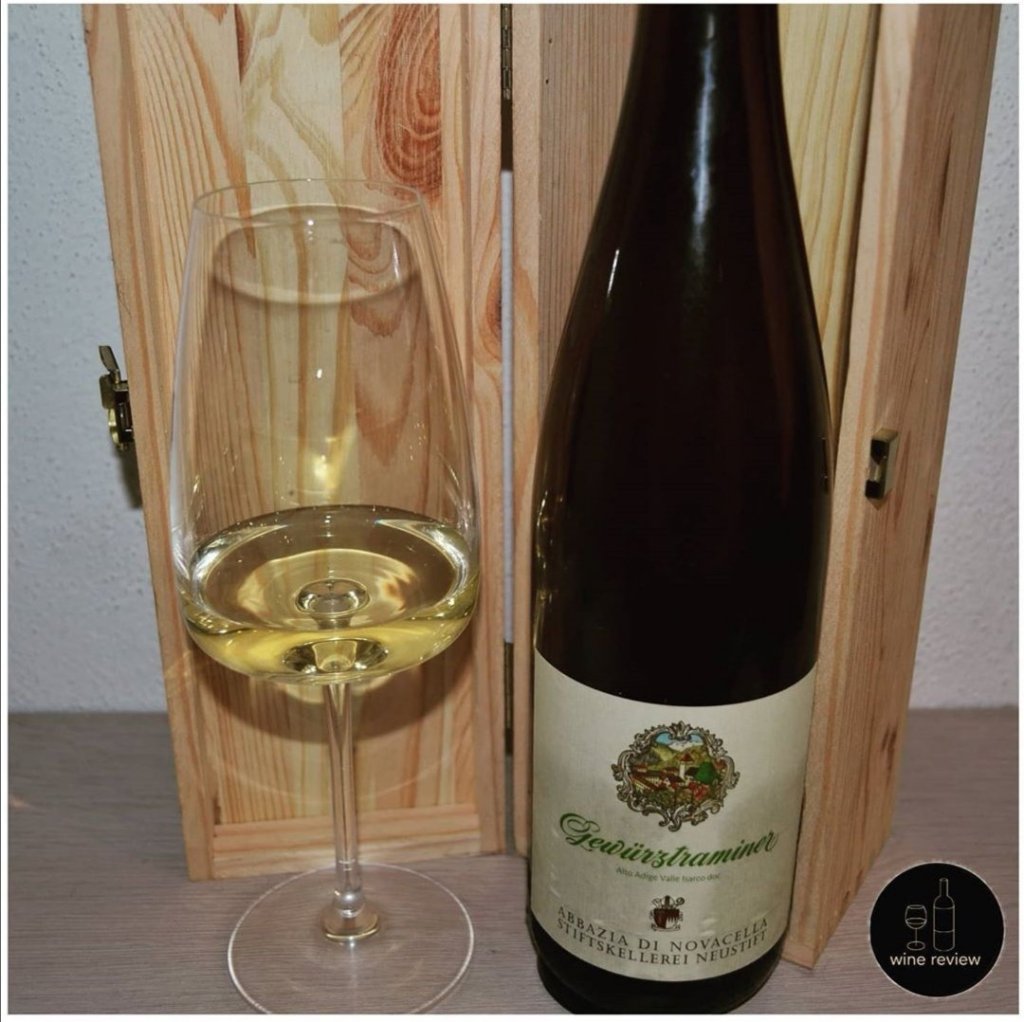
Gewurztraminer di Abbazia di Novacella

Blessed Artmanno founded the Abbey of the Regular Canons of St. Augustine in 1142, three kilometers north of the episcopal city of Bressanone. After only two years from his installation, he founds a new monastery (Novacella) just three kilometers from his episcopal residence. In 1142, the Sunday before the feast of All Saints, he consecrated the church of the neo-abbey. Following the social and economic upheavals of the early sixteenth century, the flowering period of the Novacella Abbey is approaching a rapid end. In May 1525, the Abbey was sacked and occupied by the surrounding farmers. Thanks to the foresight of its abbots and canons and to the proper functioning of the company, the Novacella Abbey has managed, up to now, to cope with its original tasks. In addition to the school part, personal and professional training and improvement also have great value in Novacella. 3 are and remain the main tasks of the canons: the care of the solemn celebrations of the liturgy, the common prayer in choir and above all the parish activity. Through donations, foundations, purchases and exchanges, the Abbey accumulated considerable possessions of vineyards, from 600m s.l.m. they rise on steep slopes up to 900 meters. The abbey not only produces wine but also high quality products from the abbey’s pomace, apples and herbs.

I tasted the GEWÜRZTRAMINER which impressed me not only for its rich and aromatic scents but also for the meticulous work done for the 2019 vintage which was not an easy note but this wine has shown great skill on the part of the cellar’s oenologist in obtaining a fresh wine with a marked acidity and at the same time enveloping, guaranteeing an easy drink. This bottle confirms the absolute care of the abbey in its wine-growing activity.

Perfect to drink with fish dishes whether in salt or fried crust. If desired, it can also be accompanied with pasta dishes based on clams or mixed fish.

Marchesi di Barolo

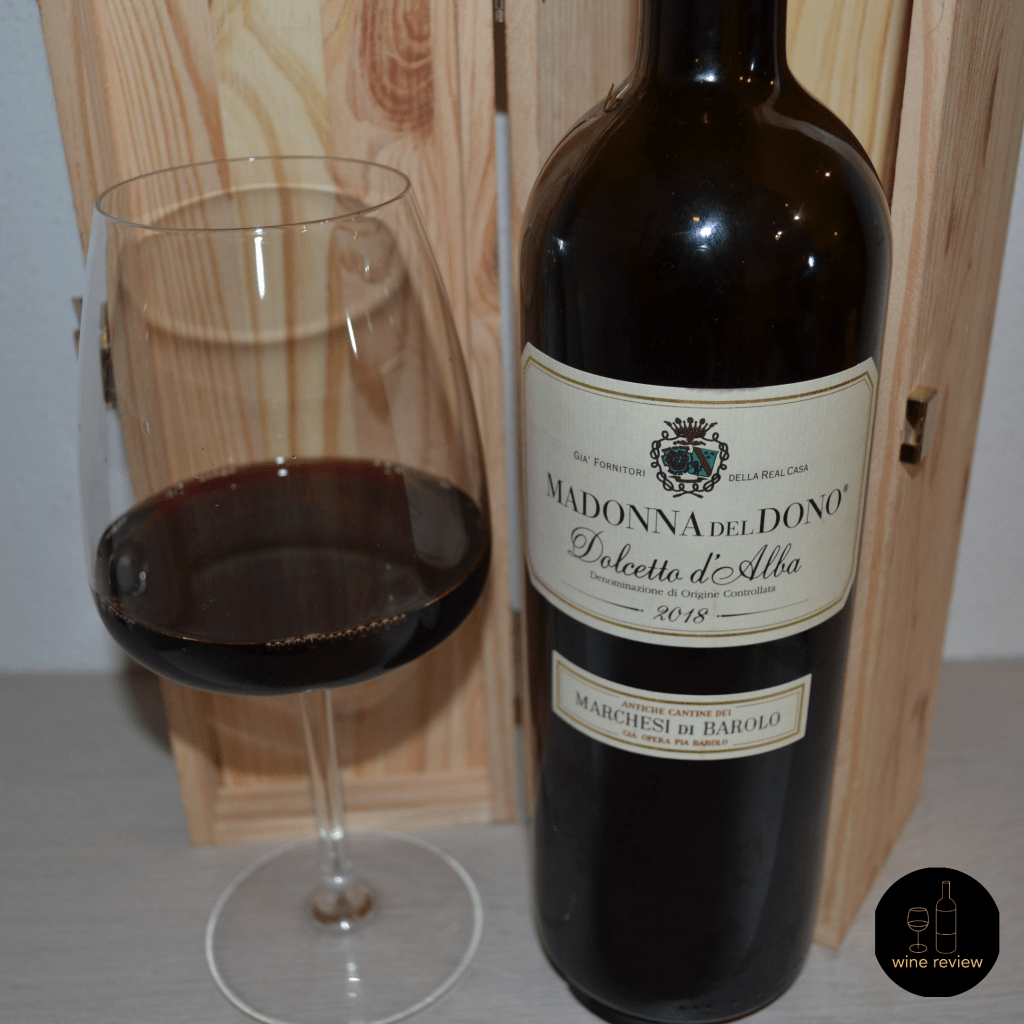
Dolcetto d’Alba di Marchesi di Barolo

The Ancient Cellars of Marchesi di Barolo are based in Barolo, in the building facing the Castle of the Marquises Falletti. The story begins, more precisely, in 1807 when the Marquis of Barolo, Carlo Tancredi Falletti, marries a French noblewoman in Paris, Juliette Colbert of Maulévrier, great-grandson of the famous finance minister of the Sun King. It was Juliette who understood the great potential of the wine produced in Barolo which, only after a complete fermentation and a prolonged aging in wood, could reveal all the typical qualities of the soil and the vine, the nebbiolo. Following the death of Juliette, the Tenuta Opera Pia Barolo, or the ancient winemaking and aging cellars of the Marquis of Barolo, was purchased by Pietro Abbona. Today, the Abbona family continues in production.

Dolcetto d’Alba Madonna del Dono, is a red wine produced with 100% Dolcetto grapes that I have appreciated very much because it is harmonious and with a low level of acidity. What struck me about this wine is its evolution even if it is a young sign of a great work of refinement and careful yield of the grape.

It is a wine that goes well with any meal. Excellent as an accompaniment to first courses and second courses of meat but also starters from the land.

Contadi Castaldi

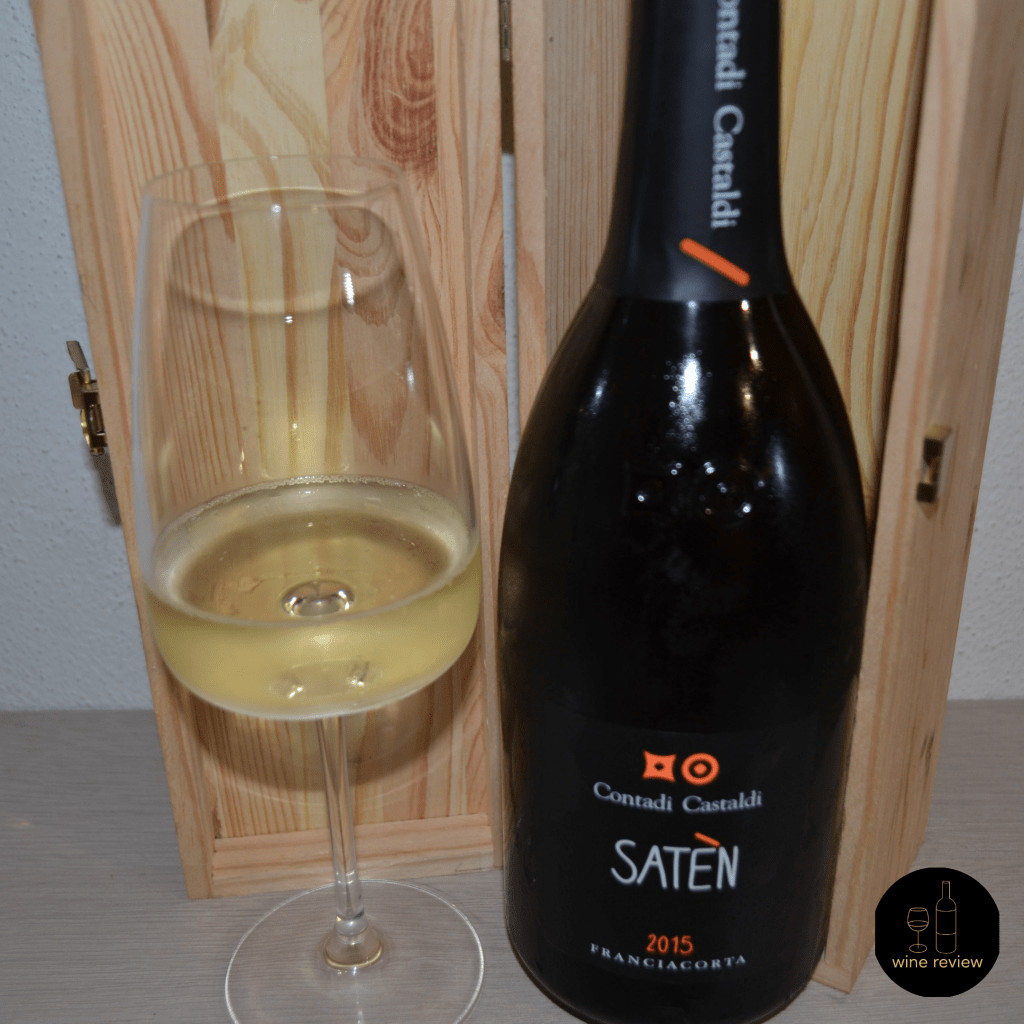
Franciacorta Satèn di Contadi Castaldi

In the second half of the twentieth century, the Fornace Biasca stopped its activity and Vittorio Moretti took it over for a main reason, linked to the childhood memories of his wife Mariella. In the 1980s, Franciacorta was at the height of its development, Vittorio and Mariella Moretti together decided to convert the furnace into a cellar thus changing their functionality by turning to the land and the vineyard. They gave birth to Contadi Castaldi who already name tells the history of Franciacorta. In fact, the “counties” were, in medieval times, the counties of Franciacorta, small territorial units renamed for excellent agricultural production; while the “castaldi” were the lords of the counties to whom the government of the lands was entrusted.

I had the pleasure of tasting their Zèro on a special occasion and I was very impressed by the elegance of Franciacorta as it remains balanced and fine in the mouth, two characteristics that make it, in my opinion, easy to drink. Based on this experience I went further by trying the Satén and this also confirmed to me the experience of the winery in the production of this wine as this, having a low concentration of sugars and richness, allows the flavors characteristic of this to emerge more Franciacorta.

Perfect to serve as aperitifs but also as an accompaniment to fish or pastry preparations.

Progetta un sito come questo con WordPress.com
Comincia ora